For Mike Sizemore, Disability Insurance Was a Financial Lifesaver

For Mike Sizemore, Disability Insurance Was a Financial Lifesaver

Life Happens first met Mike Sizemore in 2015, three years after a drunk driver hit him while he was crossing the street and his life changed forever. We captured his story as part of our Real Life Stories program—at the time, he was still recovering from the accident following countless surgeries. Fortunately, he had disability insurance when he needed it most and could continue paying his bills and rent while he was unable to return to work.

We recently had the opportunity to follow up on Mike’s story and see how he’s doing now, more than a decade after the accident.

Life Happens: What’s one moment that changed your life?

Mike Sizemore: A decade ago, when I was 27, I was hit by a drunk driver while I was walking across an intersection. I was so badly injured—fractured skull, separated shoulder, shattered legs—that doctors weren’t sure I’d live.

LH: How was your life different?

Mike: The accident changed my whole outlook on life. I was in critical care for months and then spent another year and a half learning how to walk, talk and function all over again. I was at the start of my career, which looked so promising, and suddenly I was unable to work.

LH: How did disability insurance help?

Mike: It’s been a financial lifesaver. It replaced a significant portion of my income when I couldn’t work at all. And with my traumatic brain injury, I’m still not able to work full-time. So, it supplements my income, allowing me to live a full life. My fiancée and I just bought a house, and I’m able to give my son the childhood he deserves.

LH: What’s your advice to others?

Mike: Don’t think that it can’t happen to you. It comes down to the simple fact that if you work and rely on your income, you need disability insurance.

Simply put, disability insurance is for anyone who works. Your everyday expenses like bills, groceries and rent payments still pile up even if you can’t work, and medical bills from an illness or injury can make things even worse financially. Disability insurance provides you with a percentage of your income if an illness or injury prevents you from working and earning a living, just like it continues to do for Mike eleven years after his accident.

You can read more about Mike’s story here.

Life Insurance: Easing Financial Concerns for Single Moms

Life Insurance: Easing Financial Concerns for Single Moms

Whether or not we want to admit it, most of us have financial concerns. But what’s of particular interest: Almost a third of people (31%) say they are “very or extremely concerned” about a range of financial issues.

The new 2023 Insurance Barometer Study by Life Happens and LIMRA shows those concerns range from saving enough for a comfortable retirement, which tops the list at 44%, to feeling stressed about paying off student debt (18%).

Financial Concerns for Single Moms

Diving deeper, the data on single moms shows their financial concerns are more elevated across the board, often by double digits. Here are just three concerns of single moms versus the general population:

  • Having money for a comfortable retirement: 58% vs. 44%
  • Leaving dependents in a difficult financial situation should I die prematurely: 51% vs. 29%
  • Ability to afford college for children: 40% vs. 22%

There is something that helps provide financial peace of mind, though: having life insurance. In fact, 69% of life insurance owners say they feel financially secure vs. 49% who don’t own it. For single moms, 52% of those with life insurance feel secure vs. just 30% of those who don’t have it.

However, only two in five single mothers (41%) own life insurance compared to over half (52%) of all adults. And in addition, six in 10 single mothers report having a life insurance need-gap, meaning they either need it or know they need more coverage than they currently have, representing about 5 million single moms.

More Than One Reason to Own It

The primary reason single moms own life insurance (63%) is the same as the general population: covering burial costs. However, only a quarter say they have it to replace lost income. While everyone’s situation is unique, for those single moms who are the sole income-earner, this stat is troubling.

In addition, many don’t know that life insurance can address a range of financial concerns besides covering burial costs and income replacement, including college costs and retirement income (listed as top concerns) via a permanent life insurance policy.

The good news is that the barriers that often keep people, including single moms, from getting life insurance are easy to overcome.

Tips for Single Moms

Insurance professional Barb Pietrangelo, the chair of Life Happens with her own financial planning practice in Ada, Mich., has these tips for getting your life insurance in order. Having been a single mom as well, she shares these insights:

Get some coverage—and don’t let cost stop you. There is an important reason: Half of people overestimate the true cost of life insurance by three times or more, according to the study. Barb says that starting small is OK. “Twenty dollars a month can typically get you a term life insurance policy that can take care of final expenses and make sure there is some money for your children, too.”

Having no coverage at all can have serious consequences. The stories from the recipients of Life Happens’ Life Lessons Scholarship Program show the stark reality of what happens when children like Alston Handy, for example, lose a parent—or a single mom—who had little or no life insurance. “These stories are heartbreaking,” says Barb, “and it doesn’t have to be that way with a little planning.”

Get permanent life insurance as soon as you can afford it. “It protects your kids if something happens to you, which is most important,” says Barb, “but it also builds cash value over the life of the policy, which you can tap for any purpose later on, like money for your children’s college education or your retirement.” She emphasizes that if you can’t get a permanent policy right away, buy a term policy that allows you to convert it to permanent coverage later.

Let life insurance take care of you down the road. Permanent life insurance can come with features like long-term care for when you’re older, Barb says. “I think of it this way for those who are single: The only person that is going to take care of you when you are older is the younger woman you are today,” she says. Life insurance can have living benefits to help you along your financial journey.

While you can certainly buy coverage online, don’t overlook working with an insurance professional who can tailor coverage to your needs and budget. Keep in mind that consulting with an agent about your life insurance needs won’t cost you and doesn’t obligate you to buy anything. If you don’t have an agent and want to find one in your area, you can use the Life Happens Agent Locator.

Changing Jobs? Here’s How to Handle Life Insurance and Disability Insurance

Changing Jobs? Here’s How to Handle Life Insurance and Disability Insurance

Are you considering a new job opportunity? If so, you’re not alone. The average employee stays at a job for just over four years, so people of all ages will likely see a job change at least several times in their lifetime. Whether it’s a voluntary move, switching from full-time to part-time, or the result of a layoff, it’s a big event in your life that comes with financial consequences.

Have you thought about what happens to the insurance coverage you enjoyed while you were at your job?

Here are some of the most popular questions employees ask about these benefits, along with what to expect when you pursue your next opportunity.

What happens when you leave a job with insurance?

If you get your insurance coverage through somewhere other than your employer, such as your spouse’s workplace or directly from an independent insurance agent, nothing should change for you. You would keep your current policies. However, when you get to your next job, it may be worth looking at their benefits to see how they compare.

Some employers cover the complete cost of life and disability insurance for their employees, or at least significantly discount it. Seeing what your new job offers could be an opportunity to get more coverage for less money out of pocket.

If you only have an employer-sponsored plan, you should ask the HR or benefits department what will happen. Often, your group life insurance or disability insurance that you get through work could be lost if you change jobs, lose your job or retire.

Some policies may be portable, meaning you can take them to your new job. Check with the HR department to see what options are available to you. If they let you keep your plans, you’ll have to convert them from a group policy to an individual one, which may increase the price. You’ll also have to pay any amount of the premium that your former employer paid on your behalf as part of your benefits package.

What questions should I ask when choosing a new insurance plan at a job?

Starting a new job can be exciting. In addition to your new salary, consider what insurance benefits you can now access. Ask these questions to get the best idea of which plans are a good fit for you.

What insurance benefits do you offer?

Options include health, dental, life, disability, dismemberment, accident or illness insurance, or other reimbursement plans. Not all company benefits are created equal, so be sure to get a thorough picture of what’s offered.

Can I see a summary of the life insurance plan options?

Your new employer may advertise life or disability insurance, but what does this mean? Are the premiums affordable? Is it enough to really help you or your family if the worst happens? How long do you have to wait to be covered? Is a medical exam required?

Your life insurance through work is a great benefit to have, but coverage is typically only one or two times your salary, or a set amount like $50,000. While that may sound like a lot of money, you have to consider how long your loved ones would need to rely on that money to be OK financially.

Get the details of plan options before you commit, and consider purchasing an individual life insurance policy that you own. That way it always stays with you, no matter what job you have.

Is there an enrollment period?

Most employers give you so many days to sign up for a plan, whether 30 or 90. It often coordinates with when you’re eligible to start. Otherwise, they may have you start at the beginning of the next enrollment period if that’s coming soon. Ask when this is and what happens if you miss it; you may be forced to wait for the next open period.

You never know when you’ll need insurance. Owning an individual life or disability insurance policy can help make sure you’re protected regardless of the enrollment period. The same company you use for your home or car insurance may also offer these other policy types.

How do I pay for the premium?

Some insurance plans offered through work are at least partially covered by your employer, but this isn’t always the case. They could offer several plans, with only the lowest-cost, lowest-coverage plan being free. However much it costs you, ask how this cost will be paid. If it comes directly from your paycheck, will it be monthly, weekly or another frequency?

It’s common for employers to offer several coverage options, and you may only be comfortable paying for the lower-priced plan initially. While only you can decide how much coverage you need, consider how you might be able to afford more coverage over time. What are your plans for next year, after you’ve made more money at your new job?

With an annual policy review, you can compare your insurance needs against your budget and goals for possibly getting more coverage each year. With the employer covering at least some of the policy costs, this is an excellent opportunity to increase your coverage with less money out of your own pocket.

What to know: Every workplace handles insurance differently. This is true for someone leaving a company and for someone entering it as a new employee. Know the facts about insurance plans to stay empowered throughout your career journey.

Why Life Insurance Is Worth Your While at Any Age

Why Life Insurance Is Worth Your While at Any Age

You may have heard of life insurance and thought you don’t need it, especially if you’re still young and don’t have any dependents. And yes, it can be considered an extra monthly or yearly cost, but it’s worth your while not only when you’re young, but as the years pass and your financial investments and dependents multiply.

Continue reading below as we answer some common misconceptions about life insurance and tell you why it’s worth your while at any age.

What is Life Insurance?

First, let’s start with the basics. Life insurance is a contract or policy that provides your loved ones (beneficiaries) with financial support if the insured person passes away. Having life insurance can give peace of mind to your family members and help minimize the financial impact of your death.

If the policyholder dies during the policy term, the life insurance company pays your family a pre-decided sum of money, also known as the death benefit.

Misconceptions About Life Insurance

Many people think life insurance isn’t necessary or have other misconceptions about it. Here are some common myths about life insurance and the truth behind them.

You should only get life insurance when you’re older. You may not think you need it now, but getting life insurance while you’re young is beneficial. Getting coverage in your 20s or 30s when you’re young and healthy is usually less expensive than when you’re older. Lock in that rate now before any health conditions surprise you down the road.

Life insurance is too expensive. Paying the premium can feel like just another cost, but you never know the course that life will take. Tomorrow is never guaranteed. It’s important to remember that any amount of life insurance coverage is better than none at all, and it probably costs a lot less than you think. Recent research shows that 80% of people overestimate the cost of a life insurance policy.

Life insurance is only useful after you die. Life insurance gives you and your family peace of mind and financial stability if anything happens to you. It can cover funeral costs and any outstanding debt you may have. It can also cover everyday expenses beyond these final expenses, from a mortgage to putting your kids through school. The peace of mind of opting for a policy comes long before the end of life.

Benefits of Life Insurance by Decade

Now, let’s explore the benefits of having life insurance at every age. Each decade brings new milestones, but the advantages of life insurance remain.

Life Insurance in Your 20s

Your 20s are a huge transition period, marked by significant events like finishing school and beginning your career.

Purchasing life insurance in your 20s is important because it allows you to lock in a lower premium rate, making it very affordable while you are young and healthy. As you age, your risk of death increases, and so do the premiums for life insurance.

As you start building your career, life insurance can be used as an investment option to save for future financial goals, helping you in the present and future. Plus, having life insurance can provide financial protection for your loved ones if you were to die unexpectedly during this time.

Life Insurance in Your 30s

Your 30s also come with lots of change, with many getting married, purchasing their first home and starting a family during these years. You are building the foundation of the life you’re dreaming of!

Your 30s are often a time when several people come to rely on you. And if someone depends on you financially, you are most likely someone who needs life insurance. With so many milestones during this time, opting into life insurance becomes crucial in the case of an unexpected event.

Another added benefit is that when you secure life insurance in your 30s, you’re still relatively young and healthy, meaning you will receive lower premium rates than if you wait until you get older.

Life Insurance in Your 40s

In your midlife, you have now built the walls and roof around your foundation. And that means purchasing a policy and not delaying is essential. If your life includes a partner, children, aging parents or relatives, a mortgage (or multiple), or a business, then life insurance is a must to ensure that no one is financially harmed if something happens to you.

You can still find an affordable policy depending on your health habits and medical conditions, so lock it in before any concerns arise. For example, someone in their 40s in excellent health may receive a better rate than a 30-year-old with health issues. However, inevitably as you age, your health concerns increase—getting a policy will feel like a weight off of your shoulders, especially with the additional financial obligations that can come with this decade.

Life Insurance in Your 50s

The first-half century is complete, and now it’s time to enjoy the fruits of your labor! Check off those bucket-list items, enjoy an empty nest, purchase that second home or car you’ve always dreamed of and do the final prep for retirement.

Your 50s are about ensuring you’re on the right track to achieving financial security in retirement. There’s no way around it: Purchasing life insurance in your 50s is probably going to be significantly more expensive than it would’ve been earlier in life. But so are your life-long obligations if there is no financial protection in place.

Whether you have dependent children or other big expenses such as a mortgage, a business, or a spouse who could end up outliving you, there are still many areas where life insurance could help. Think about life insurance in your 50s as a financial tool to help you achieve the lifestyle you want—it’s there to help your family in unfortunate circumstances but also to help you support your retirement and other expenses.

Life Insurance as a Senior

For those 60 and up, it may seem like your time for life insurance has passed. But don’t let your policy lapse just yet. Seniors are in direct need of life insurance, as they’re aging and thinking about arranging end-of-life plans for the sake of their families. Life insurance, as discussed, can help cover outstanding debts or mortgages and pay for final expenses like funeral costs. Additionally, senior business owners may need a life insurance policy as a key person benefit or to fund a buy-sell agreement in the event of their death.

Another reason to consider is that certain life insurance policies can help cover the cost of long-term care. As people age, they may require assistance with daily living activities, and long-term care insurance can help cover the cost of this care. Seniors also use life insurance policies to pass on wealth to their beneficiaries, providing a tax-efficient way to transfer assets to the next generation and leave a lasting financial legacy.


Ultimately, getting life insurance is always a good idea, regardless of age. It’s almost always worth it for your family’s peace of mind and financial support. No matter the milestones you’re currently enjoying, life insurance is there to protect what’s important to you financially.




So What Happens to Your Life Insurance After You Die?

So What Happens to Your Life Insurance After You Die?

Getting life insurance is a no-brainer, as it can provide your family and loved ones with crucial financial protection if you pass away. But how exactly does it work? And by that, we mean how does it “kick in” and provide the benefits once you die? Let’s explore this question and more.

First steps

First, it’s worth mentioning that it is the responsibility of the policy beneficiary, or beneficiaries, to file a claim. In other words, they must contact the insurance company and inform them of the policyholder’s death, typically by sending a death certificate and filling out a claim form to ask the insurer for the money. Contrary to what some may believe, there is no “death list” that goes around to perform this task automatically, so know that it’s not the life insurance company’s responsibility to realize that you have passed away or chase down your beneficiaries.

Because you will likely want to know who gets your money after you die, be sure to create a will that clearly states who will receive your money and informs them that you purchased a life insurance policy. In your will, it’s very helpful to include detailed information, such as your policy number and accurate contact details for your insurer. Without this information, it may take some additional time to verify your claim before the payout is received.

With all information in order, the beneficiary can proceed with contacting the insurer, sending the death certificate, filling out the claim forms and receiving the processed benefit amount when it’s paid out.

More detailed information on the entire claims process can be found here.

Who gets your life insurance payout when you die?

Life insurance claims can be paid out in several ways. Here are some of them.

  • To an estate

If your beneficiaries are not specified as part of your life insurance policy, the proceeds will likely, by default, be treated as part of your estate. If a will was enacted, then your beneficiary wishes will be followed as closely as possible.

This is another good example of why the creation of a will is very important to ensure there is no ambiguity over your estate and your life insurance proceeds.

  • To a beneficiary

If you include accurate, up-to-date beneficiary information on your life insurance policy, the money can only be claimed by the beneficiary or beneficiaries. However, there are sometimes mitigating circumstances to consider, such as an untimely death of a beneficiary. In most cases, if the listed beneficiary dies before the policyholder, the beneficiary’s heirs are entitled to the proceeds.

  • Into a trust

If you set up your life insurance proceeds to be paid into a trust when you pass away, that money will be held in the trust appropriately and distributed as a claim per the instructions outlined in that trust.

Naming and paying out to a trust can be an excellent way to help mitigate inheritance taxes and may also be used to satisfy an inheritance tax bill (typically on a larger-sized estate) without needing to liquidate assets.

Will my beneficiaries have to pay taxes on the proceeds of my life insurance policy?

Good news! When considering the death benefits of a life insurance policy, the payout is generally free from any income tax to your selected beneficiary or beneficiaries.

However, you may choose to have the insurance company keep these proceeds for a while after your death so they can be distributed to your beneficiary in a series of installments or at a later date. This way, the funds may continue to earn interest. When a payment is made to your selected beneficiary later on, it may be a larger amount because of the interest earned. Note that while the principal portion of the payment is typically free of taxes, the interest portion would be taxable to the beneficiary as ordinary income, so they would be on the hook for at least some taxes in this scenario.

Finally, in some cases, if the ownership of your life insurance policy is transferred to another party for monetary value before you die, the proceeds your beneficiary receives at your death could also be considered taxable income.


We hope this information is helpful to you. As with any complicated financial matter, it’s always best to seek the assistance of a professional who can walk you through your questions and particular situation.

The Stay-At-Home Parent’s Guide to Buying Life Insurance

The Stay-At-Home Parent’s Guide to Buying Life Insurance

Whether you’ve always stayed home with the kids or you’ve recently transitioned to the important role of stay-at-home parent, you probably know how vital your work is to the health and happiness of your family. So, what would happen if you could no longer be there for them in the way you are now?

One of the most comprehensive planning tools for keeping your kids secure is life insurance. It’s designed to be purchased now while you have some control over things and will kick in after you’re gone. Life insurance policies offer many benefits to your family, including a tax-free death benefit, a sense of financial and emotional security, and future insurability when your health may not be as certain.

1. Put yourself in your family’s shoes.

The first step of the process is often the most difficult—because no one likes to think about what life would be like if you weren’t around for your kids. Getting past the pain and discomfort is important, however, because you can’t truly explore all the options for life insurance until you’ve tried to imagine what a day or even a year in your family’s life would be like without you.

What needs will they have to meet? It probably goes beyond housework and cooking. From carpooling to tutoring to possibly even mental health services, the goods and services you provide to your family as a stay-at-home parent are valuable—and your family’s needs may be even greater in the future than they are now. Losing a loved one is disruptive and may require additional resources to help your family achieve healing and wholeness after you’re gone.

2. List out what’s needed—and what it costs.

After you’ve gone through the work of putting yourself in your family’s shoes, you have a better idea of the things they’ll need to pay for in your absence. You may have older kids and not believe they need certain services, but some extra help while they adjust may still be a good idea. Make a list of the items that will need to be initially purchased after you’re gone, along with ongoing needs the kids will have throughout their childhoods. Try your best to price these at a per-year price tag, and add extra each year for inflation.

Be sure to include any costs that your partner or other loved ones in the home may incur; you may even consider how aging parents or those who rely on you in other ways may need support, as well.

And don’t forget about funeral services, since these costs can run in the thousands!

It can be hard to predict all the costs, but a Life Insurance Needs Calculator helps simplify the process.

3. Consider ways to better your family.

While no one considers death to be a good thing, life insurance can be used to help your family move forward in some areas of their lives, even as they deal with your passing. Whether it’s paying off credit card debt or putting aside some college funds for the kids down the road, now is the time to think of your family’s financial responsibilities and put a plan in place for clearing these obstacles, if possible.

If your family lives paycheck-to-paycheck, you may not have much left over at the end of the month to put toward savings. Consider adding some extra coverage to your life insurance to help your family with an emergency fund; the larger life insurance payment could put them in a better financial position.

4. Research your options.

While it’s true that a good life insurance agent can walk you through everything you need to know about the policies they offer, doing a little research ahead of time can only help. You can get familiar with the terminology used when talking about policies, as well as get an idea of the different product types that are available. If nothing else, looking through life insurance articles and guides can inspire questions that you can write down to ask an agent when you meet.

If you don’t have a life insurance agent yet, this tool can get you connected to those licensed in your area and help you choose between them.

5. Prioritize the purchase.

At this point, you’ve done much of the hard work, and you’ve probably even talked to your family about what’s needed in the event you’re not around anymore. With that out of the way, you’re in a great position to meet with a qualified agent and get your insurance policy. Pricing tends to be better when you’re younger and in good health, so there’s an incentive to make your mind up and buy a policy sooner than later.

If, as you age, you decide you need more coverage or a different coverage type, that’s OK. Your agent can talk to you about the changes in your family to ensure you always have the right amount of coverage to help them succeed. Whether you add a new baby to the family or you want to increase your policy coverage to account for inflation, your insurance agent can walk you through what’s needed to always have adequate coverage for every new season in your family’s life.

5 Factors to Consider Before Choosing Life Insurance

5 Factors to Consider Before Choosing Life Insurance

There are many factors to consider when choosing life insurance. Some people decide to get life insurance based on emotion, while others base their decision on financial security.

It is never too early to start thinking about the risks and rewards of life insurance. Life insurance may be the most important thing you ever buy.

In this post, we’ll look at some of the key factors you need to consider before buying life insurance. These include the type of life insurance you need, how much coverage you need and when you should buy life insurance.

1.   Assess your current financial situation

It’s critical to have life insurance in place to protect your loved ones should something happen to you. When assessing your current financial situation, consider your current assets and liabilities as well as your income and expenses. This will give you a clear perspective on how much coverage you need in case of emergencies.

It’s also important to build on your knowledge of basic financial literacy as it relates to choosing the right insurance coverage for your needs. Life insurance is one of the most important decisions you can make, but it can feel complex. Take your time before making a final informed decision.

2.   The best time to get life insurance

The best time to start getting life insurance is when you’re young and healthy since premiums will be less expensive compared to when you’re older. Getting insurance now will ensure that premiums will be at their minimum.

Men universally pay higher than women because the cost is based on risk, and typically men have shorter life expectancies than women. With that in mind, it would be wise to start early so that you don’t have to pay higher annual premium rates.

3.   The amount of coverage you need

The amount of coverage you need depends on your family’s needs, your financial situation and the risks you are willing to take. The type of policy that best fits your needs is the one that has the right coverage for your particular circumstances.

For example, if you are married with a child who is young, or if you have a mortgage, you may need to consider a term life insurance policy. Life insurance will protect your dependents in case something happens to you and is a smart way of securing your family’s future.

This Life Insurance Needs Calculator from Life Happens can help you get an estimate of what you need.

4.   The types of life insurance to get

Before getting life insurance, you will want to look at the various types of life insurance available. It is essential to understand what type of life insurance will be most appropriate for your needs.

Two types of life insurance are most common:

  • Term life insurance – With term life insurance, you are paying a set amount of money each month for protection for a certain period of time (usually 10, 20 or 30 years). Once the term expires, you can renew it for continued coverage, but the rates would be based on your age bracket at that time. 
  • Permanent life insurance – Permanent life insurance payments are to be paid for the entirety of one’s life. These are designed to put lifelong protection in place for your dependents. The other good thing about permanent life insurance is that it can have a cash value that you can borrow against in the future, depending on the total accrued payments built up.

5.   What affects life insurance rates

The first step in determining the cost of a life insurance policy is to understand the factors that affect your rate. These include:

  • Your age. The price of life insurance increases the older you are. You can lower your rate by taking out term insurance or purchasing a “convertible” policy.
  • Your health. If you have a chronic disease such as diabetes, cancer or heart disease, your life insurance rate will likely be higher than for healthy people.
  • Your marital status. Married people are considered a lower risk because they tend to live longer compared to single or divorced individuals.

Bonus tip: Don’t focus too much on premium cost

Term life insurance is the cheapest type and is most appropriate for people who want a fixed timetable for premiums. Permanent life insurance is more expensive but offers greater flexibility and benefits.

There are a variety of life insurance options available, and it’s important to choose the option that’s right for you. You don’t have to focus exclusively on premiums when selecting life insurance – you can also consider coverage, features and other factors. It can be helpful to work with an insurance professional to address these different elements.

When shopping for life insurance, you need to think about your needs and your budget. When you’re ready to get a quote, you can compare life insurance rates from multiple providers to find the policy that best fits your financial situation.

Conclusion

A lot of people think of insurance as a burden when, in fact, it’s not. Life insurance is a must-have for those who want to protect their loved ones in case anything should happen to them. The benefits depend on the type of policy you choose, so it’s important to make the right decision.

Life Insurance During A Recession—Is It Really Necessary?

Life Insurance During A Recession—Is It Really Necessary?

Life may have its ups and downs, but so does the economy. Gas prices, grocery prices and the cost of just about everything seem to be going up lately. As items get pricier, you’ve probably heard talk about the possibility of a recession. But what is that exactly, and how can you justify paying for life insurance at a time like this?

What is a recession exactly?

A recession is defined as a significant decline in economic activity that lasts for months or sometimes even years. Depending on your age, you’ve likely witnessed several of them in your lifetime already. On the flip side, you’ve also been around during periods of economic expansion, which occur when the economy grows for two or more consecutive quarters.

However, as scary as recessions may sound, they’re considered an unavoidable part of the business cycle and, along with expansion, form a regular cadence that occurs in economies all around the world. Our economy expands and contracts on a regular basis due to national and international market performance. We tend to notice it more, however, when the economy takes a downturn and household budgets are seemingly pushed to the limit.

Cutting costs shouldn’t include your life insurance.

If the cost of life insurance seems like a good place to make a cut, think again. A temporary economic downturn is probably not a smart time to discontinue protecting the ones you love. If the unexpected were to happen, would they be able to afford to maintain their current lifestyle without the assistance of your life insurance policy? Would they be able to bear the financial burden of your final arrangements amid increasing costs and fees? These are just a couple of the things to consider as you make budget decisions. Is sacrificing your peace of mind really a smart choice?

Let’s face it—it’s easy to spend $100 or more each month stopping by the drive-thru for coffee or fast food. Maybe you never considered life insurance because you think it comes with a high price tag. Most people believe it will cost 2 to 3 times more than it really does when, in fact, life insurance is actually pretty affordable. According to the 2022 Insurance Barometer Study, 80% of people overestimate the cost of life insurance. Don’t let this common misconception keep you from getting the coverage you need. 

You can’t put a price on confidence.

Life insurance is about knowing that your loved ones will be provided for if something happens to you. How does it feel having the confidence that no matter what happens to you, those who mean the most will have financial security? These kinds of considerations are the most important ones to keep in mind. They allow you to sleep peacefully at night, knowing full well that you’ve done everything you can to help ensure the quality of life for those you love.

Not yet covered? Let’s take care of that.

If there’s one thing that the past few years have taught us, it’s to expect the unexpected. With that in mind, now is a perfect time to consider a life insurance purchase if you don’t yet have coverage.  

Your life insurance options depend on both your budget and your needs. If you’re only looking to cover your final expenses, your cost would likely be lower because your needs are different than those of someone who needs to make provisions for their spouse’s and children’s futures. 

Various insurance carriers offer many different types of life insurance products to choose from, but most life insurance can be defined as either term or permanent. 

  • Term life insurance protects you for a specific period of time. If you pass away during that time, your spouse or other beneficiary will receive a specified amount of money as a death benefit.
  • Permanent life insurance has no specified term since it is designed to cover you for the rest of your life. Though typically more expensive, permanent life insurance has affordable options that not only provide a death benefit but can also provide cash value, unlike term life insurance.

Some final food for thought.

It’s understandable that rising prices can cause concern, but here’s a tip for those looking to maintain a more consistent budget: Check out level-premium insurance. Level-premium is a type of term or permanent life insurance where the premium remains the same over the entire life of the policy. If you want to lock in a rate for the length of your contract, this type of policy is worth your consideration. With this type of coverage, premiums will never go up and are guaranteed to remain the same throughout the length of your contract.

This is just one of many life insurance options available, and an agent can help you find the policy that’s the best fit for you. Speak with an insurance professional or use Life Happens’ handy Agent Locator to find one near you.

Participate in Life Happens’ First-Ever Facebook Chat for Insure Your Love

Participate in Life Happens’ First-Ever Facebook Chat for Insure Your Love

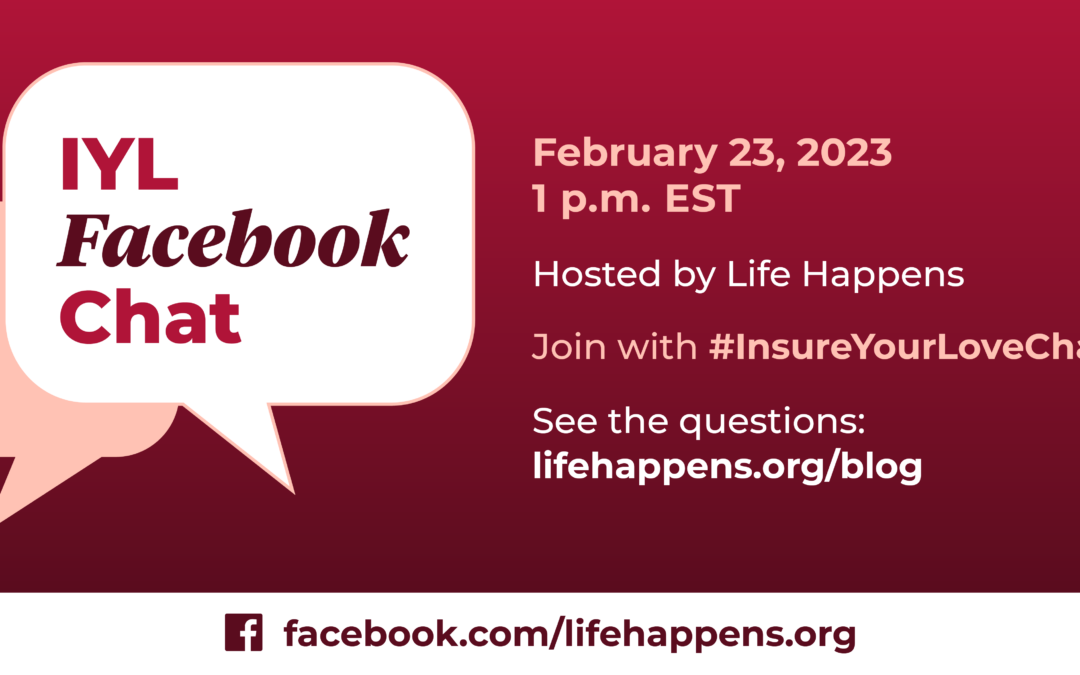
Join Life Happens for a Facebook Chat during Insure Your Love month this February. We’ll discuss all things life insurance and love! 

Please note: We are not using Twitter for this discussion. We’ve been watching Twitter’s changes closely over the past few months, and we feel it’s no longer the best platform for hosting an inclusive discussion about protecting the ones you love.

Date: Thursday, February 23 from 1 to 2 p.m. EST

Where: Join us on Facebook using your personal handle or your company’s handle.

Hashtag: Use and follow #InsureYourLoveChat during the above time frame.

How to: To share a response from your company account on Life Happens’ posts, first switch your profile to your company’s Facebook page. Then look up Life Happens in the search bar. When you’re on Life Happens’ Facebook page, make sure you’re writing a comment as your company’s page by checking to see that the profile picture and name matches your company and not your personal account. If you need any assistance, please contact Corey Goodburn, our Social Media Specialist, at cgoodburn@lifehappens.org.

Life Happens will moderate the discussion and drive the conversation on Facebook using the questions below. Pass your answers through company compliance beforehand if needed. The concept is very similar to our previous Twitter Chats: We’ll share each question as a post and create a dialogue in the comments with companies’ answers. Remember, you’ll have to use the #InsureYourLoveChat hashtag in each comment. You are also encouraged to share our posts and engage with other comments.

Q1: Why do people say that life insurance is love insurance? #InsureYourLoveChat

Q2: When do most people start to think about life insurance? When do people actually need to starting looking for life insurance? #InsureYourLoveChat

Q3: Why do single people need life insurance? #InsureYourLoveChat

Q4: What is something that most people don’t know about life insurance? #InsureYourLoveChat

Q5: What are some big misconceptions that people may have about juvenile life insurance? #InsureYourLoveChat

Q6: What does the theme “Life Insurance: For Anyone Who Loves” mean to you and your company? #InsureYourLoveChat

Q7: How are you raising awareness about life insurance during this month of love? #InsureYourLoveChat

And don’t forget, Life Happens is a nonprofit organization with a mission to educate people about life insurance. Want to help us further our mission by becoming a member company? Contact Ric Pratte at partnerships@lifehappens.org.

Celebrating Life Happens’ Accomplishments in 2022

Celebrating Life Happens’ Accomplishments in 2022

Happy new year from all of us at Life Happens. With the arrival of 2023, we’ve been reflecting on Life Happens’ accomplishments in 2022 and the memorable moments we achieved together as an industry. Thank you to the many company members, agents and supporters who have contributed to our growth.

Recent data shows that the Hispanic community has the highest need for life insurance: 51% say they need life insurance, or more of it. This suggests 22 million Hispanics in the U.S. need coverage (based on U.S. Census data).

With this in mind, Life Happens focused on reaching more Hispanic Americans with the message that getting life insurance is an easy decision to make for the ones you love.

Here are just a few of the highlights:

  1. Actress, producer, proud Puerto Rican and mother Roselyn Sánchez joined us as the first bilingual spokesperson for Life Insurance Awareness Month.
  2. A supplemental report of the 2022 Insurance Barometer Study that Life Happens conducts in partnership with LIMRA focused specifically on the Hispanic market, offering new insights to the industry about how to reach this community.
  3. New educational content for Hispanic Heritage Month helped spread the message, with more resources than ever available in Spanish.
  4. Partnerships with Hispanic artists, influencers and content creators helped us feature and reach diverse audiences.

These are just a few of the activations from 2022. Check out our newly released 2022 Annual Report to learn more.

Together we can achieve our nonprofit mission of giving all Americans unbiased information to help them make smart insurance choices. We’re looking forward to what we can accomplish together this year.

Pin It on Pinterest